Written by Dr. Laura Mraz, OTD, OTR/L
President, Illinois Occupational Therapy Association (ILOTA)
Working as an occupational therapist for nearly two decades, I’ve witnessed how alarming it can feel for parents to find out that their child has been diagnosed with autism spectrum disorder. It can feel like the ground beneath them has shifted and their whole world has been shaken. Suddenly, a flurry of questions are flying at me in a rapid succession:
“What caused my child’s autism?”
“Could I have prevented it?”
“Is there a cure for autism?”
“What do I do next?”
These are all legitimate concerns that I will address, but let’s get one thing out of the way, right away. Autism isn’t a reflection of something you did or didn’t do. It’s not your fault. Take a moment and let that truth settle in.
Autism is a neurodevelopmental difference. A unique way the brain processes information, communicates, and experiences the world. For families navigating an Autism diagnosis, finding clear, trustworthy information about causes and support services can make a tremendous impact on a child’s development.
Most importantly I’ve seen firsthand how Early Intervention produces amazing results and the importance of seeking out resources as soon as possible.
This article will explore what we know (and don’t know) about autism to help you feel steadier and put you on solid ground as you move forward.
If you’d like more personalized insights, please reach out to Three Birds One Mission. We’re here to support you every step of the way!
What Actually Causes Autism?
Think of the brain as a vast, intricately woven tapestry with thousands of threads crossing, layering, and connecting to create one remarkable whole. Autism doesn’t come from a single thread pulled loose or one color chosen differently. There is no single cause. Instead, autism arises from a combination of genetic influences and biological factors during pregnancy and early development.
Scientists have learned an enormous amount over the past two decades, and while the picture is still coming into focus, one truth stands firm. Autism is rooted in biology, not in behavior or parenting.
The Genetic Component
Genetics play a significant role in autism. Not through one “autism gene,” but through hundreds of small variations that influence how the brain grows and communicates.
Here’s what research tells us:
- Twin studies: If one identical twin has autism, the other twin has a 60–90% chance of also being autistic. That’s a powerful signal that genes matter a great deal.
- Associated conditions: Autism can be linked to certain genetic conditions (like fragile X syndrome or Rett syndrome), but these account for only a small percentage of cases.
- A diverse landscape: Most autistic children don’t have a single identifiable genetic syndrome. In fact, researchers can pinpoint a specific genetic cause in only about 15 to 30% of cases. Meaning autism’s genetic story is incredibly varied from child to child.
Scientists have now identified more than 100 autism-risk genes, and the number keeps growing. Recent studies (2020–2025) confirm that autism is polygenic. That’s a clinical term worth unpacking: polygenic simply means “many genes.” Rather than one switch being flipped, hundreds of tiny genetic variations each contribute a small piece to the overall picture.
Some of these variations are inherited from parents. Others occur spontaneously during early development. They simply happen, with no connection to anything a family did. Your love, your attention, and your care did not create your child’s autism. They shape your child’s wellbeing, but they did not cause the condition.
Biological and Environmental Influences
Genetics lay the foundation, but certain biological factors during pregnancy or birth may influence how autism develops. It’s important to hear this clearly: these are risk factors, not causes. Most children exposed to them do not become autistic.
Pregnancy-related factors include:
- Advanced parental age: Older age in either parent at conception can slightly raise likelihood.
- Gestational diabetes: Diabetes during pregnancy is associated with modestly increased risk.
- Significant maternal immune responses: Certain strong immune reactions during pregnancy may play a role.
- Prenatal exposure to valproate: This anti-seizure medication has been linked to increased likelihood when taken during pregnancy.
- Certain pregnancy complications: A range of complications may contribute in combination with genetics.
Birth-related factors include:
- Premature birth: Babies born very early face somewhat higher likelihood.
- Low birth weight: Especially very low birth weight.
- Reduced oxygen during delivery: Oxygen deprivation at birth is a recognized risk factor.
- Emergency medical intervention at birth: Difficult deliveries requiring urgent care.
These factors do not cause autism on their own. They simply increase likelihood in children who already carry genetic susceptibility. Think of it as a combination. Genetics provide the foundation, and biology may add its influence on top.
What Does Not Cause Autism
Let’s clear the air on a few myths, because misinformation can add unnecessary guilt to an already tender moment.
Autism is not caused by:
- Parenting style
- Emotional trauma
- Lack of attention
- Cold or distant caregiving
- Vaccines
The “refrigerator mother” theory was a hurtful mid-20th-century belief that blamed autism on emotionally distant mothers. This theory has been thoroughly and repeatedly debunked. It was never based on sound science, and modern research has firmly established autism as a neurodevelopmental condition with biological and genetic roots.
Another popular theory is that vaccines cause autism. The vaccine myth deserves special attention because it still circulates. It began with a 1998 study published in The Lancet by Andrew Wakefield, which claimed a link between the MMR vaccine and autism.
That study was fully retracted in 2010 after investigators uncovered fabricated data, undeclared financial conflicts of interest, and serious ethical violations. Since then, dozens of large-scale studies involving millions of children have found no link whatsoever.
One of the most compelling is a 2019 Danish study published in the Annals of Internal Medicine, which followed more than 650,000 children and found no increased risk of autism among those who were vaccinated.
It’s also worth knowing that thimerosal, a mercury-containing preservative, was removed from most childhood vaccines back in 2001. Autism rates continued to rise, further disproving any connection.
Is There a Cure for Autism?
Autism is not a disease. It’s a neurodevelopmental difference. Because of this, autism is not something to be “cured.”
Please hear this: that doesn’t mean your child can’t grow, thrive, and make extraordinary progress. With the right support, families consistently see meaningful development and growth:
- Communication improves — through words, signs, devices, or gestures.
- Social skills strengthen — one connection at a time.
- Independence grows — in dressing, eating, and daily routines.
- Emotional regulation increases — with tools that help your child feel calm and understood.
- Quality of life expands — for your child and for your whole family.
The goal is not to eliminate autism. The goal is to help your child become the fullest, happiest version of themselves.
Understanding the Autism Spectrum
Autism is described as a spectrum because it varies widely from child to child. To help describe how much assistance a child needs day to day, clinicians use the DSM-5 support levels. Here’s what those look like in real life:
- Level 1 (Requires support): A child might speak in full sentences and do well academically, yet find it hard to start or keep a conversation going. They may want friendships but struggle to navigate the social back-and-forth.
- Level 2 (Requires substantial support): A child might communicate in shorter phrases, use limited nonverbal communication, and have a strong, focused interest in specific topics. They benefit from more structured, consistent support throughout the day.
- Level 3 (Requires very substantial support): A child may use minimal speech, communicate mainly to meet basic needs, and require significant daily assistance. These children thrive with intensive, individualized care.
Here’s the encouraging part: these levels are not permanent. With development and the right intervention, many children move along the spectrum and require less support over time.
The Case of “Recovered” Children — What Research Really Shows
You may hear stories of children who “lose” their autism diagnosis. Researchers call these optimal outcomes.
A landmark 2013 study by Fein and colleagues found that some children who received early, intensive intervention no longer met the diagnostic criteria for autism later in life. Updated research from 2014 through 2025 adds important nuance we should honor:
- These children often still have subtle differences in sensory processing or social attention.
- Many continue to identify as autistic or neurodivergent — and that’s perfectly okay.
- Some experience exhaustion from “masking,” or working hard to hide their differences.
- Losing a diagnosis does not mean becoming neurotypical.
Recent studies (2023–2025) estimate that anywhere from 3% to 25% of children may eventually lose their diagnosis. Usually those with milder early traits, strong early language skills, and access to intensive early support.
The takeaway is one of genuine hope: the brain is remarkably adaptable, and children can make extraordinary progress. But the goal is thriving, not “curing.
Evidence-Based Supports That Help Children Thrive
Think of intervention as a toolbox, with each therapy offering a different tool to help your child grow. The most effective plans often bring several of these together in a coordinated way.
- Applied Behavior Analysis (ABA): ABA uses positive reinforcement to teach skills and reduce challenging behaviors by breaking big goals into small, achievable steps. Modern ABA is naturalistic, child-led, and focused on skills that genuinely matter to your child’s daily life.
- Speech Therapy: This supports both verbal and nonverbal communication. It includes AAC — augmentative and alternative communication — which covers sign language, picture systems, and speech-generating devices that give every child a voice.
- Occupational Therapy (OT): As an occupational therapist, this is close to my heart. We help children build daily living skills — dressing, eating, using utensils — while supporting sensory processing differences that shape how they experience the world.
- Physical Therapy (PT): PT builds strength, balance, coordination, and mobility, giving children a stable foundation for movement and play.
- Social Skills Training: This teaches conversation, perspective-taking, and friendship skills in warm, practical ways.
- Parent-Mediated Interventions: Approaches like DIR/Floortime help you turn everyday interactions — playtime, mealtime, bath time — into powerful learning moments. You become part of the team.
- Educational Supports: IEPs, visual schedules, structured teaching, and classroom accommodations create environments where your child can learn best.
- Medical Supports: Medications may help with co-occurring conditions like anxiety, ADHD, or sleep challenges, always guided by your child’s care team.
An Occupational Therapist’s Perspective
Because OT is my field, let me share a little more about what we watch for and how we help.
- Sensory processing: Many repetitive behaviors — hand-flapping, rocking, or lining up toys — often stem from sensory needs. They can be coping tools your child uses to manage anxiety or sensory overload. Some children are over-responsive to bright lights, loud sounds, or scratchy fabrics; others are under-responsive and seek out deep pressure or big movement. We create tailored environments — think adjustable lighting, varied textures, and movement tools — to help your child feel regulated and ready to learn.
- Daily living skills: Through structured routines, like a predictable morning or bedtime sequence, we help children build independence and confidence in self-care tasks.
- Emotional regulation: Outbursts, tears, or behaviors like headbanging are often forms of communication when a child feels overwhelmed. We help translate those signals and teach safer, more effective ways for your child to express what they need.

Why Early Intervention Matters
The brain is most adaptable before age three. It’s a window of incredible neuroplasticity, which simply means the brain’s ability to grow and rewire itself. Starting support early can lead to:
- Stronger language skills
- Better social relationships
- Increased independence
- Reduced need for support later on
And please remember: it’s never too late to start! Children, teens, and adults continue learning and growing throughout their entire lives.
Reframing Autism: The Neurodiversity Perspective
Many autistic individuals and advocates encourage us to see autism not as a defect, but as a natural variation in human neurology. I find this perspective deeply hopeful.
From this view, our shared goals become:
- Support strengths — celebrate what your child does beautifully.
- Reduce barriers — change the environment, not just the child.
- Build independence — one skill at a time.
- Teach self-advocacy — help your child understand and express their own needs.
- Create accepting environments — spaces that welcome neurodivergent people as they are.
Your child is still the very same person they were before the diagnosis. The diagnosis simply gives you a clearer map for how to support them.
A Final Word of Hope
Your child’s journey may look different than you expected but it can still be beautiful, joyful, and full of growth. Celebrate the small victories. Connect with other families who understand. Build a supportive team around your child. And remember: your child has strengths that will emerge and shine over time.
You aren’t here to fix your child. You’re here to help them flourish.
Your child’s story is still unfolding, and it will be filled with strengths, surprises, and moments of joy. I’m honored to walk beside Chicagoland families as they navigate this journey.
Frequently Asked Questions
What causes autism?
A complex combination of genetic and biological factors. There is no single cause.
Did I cause my child’s autism?
No. Autism is not caused by parenting, pregnancy choices, or emotional experiences. It’s rooted in biology.
Do vaccines cause autism?
No. The 1998 study that started this myth was fully retracted, and large-scale research — including a Danish study of over 650,000 children — confirms there is no link.
Can autism be cured?
Autism is not a disease, so there is no cure. But with the right support, children can make extraordinary progress and thrive.
What does “recovered” mean?
Some children no longer meet diagnostic criteria after early intervention, but they often still have subtle autistic traits and many continue to identify as neurodivergent.
What supports help most?
A coordinated mix works best: ABA, speech therapy, occupational therapy, physical therapy, social skills training, parent-mediated approaches, and educational supports.
Why is early intervention important?
Early brain plasticity allows children to build foundational skills more quickly. But it’s never too late to begin. Growth is possible at every age.
Learn More About My Programs
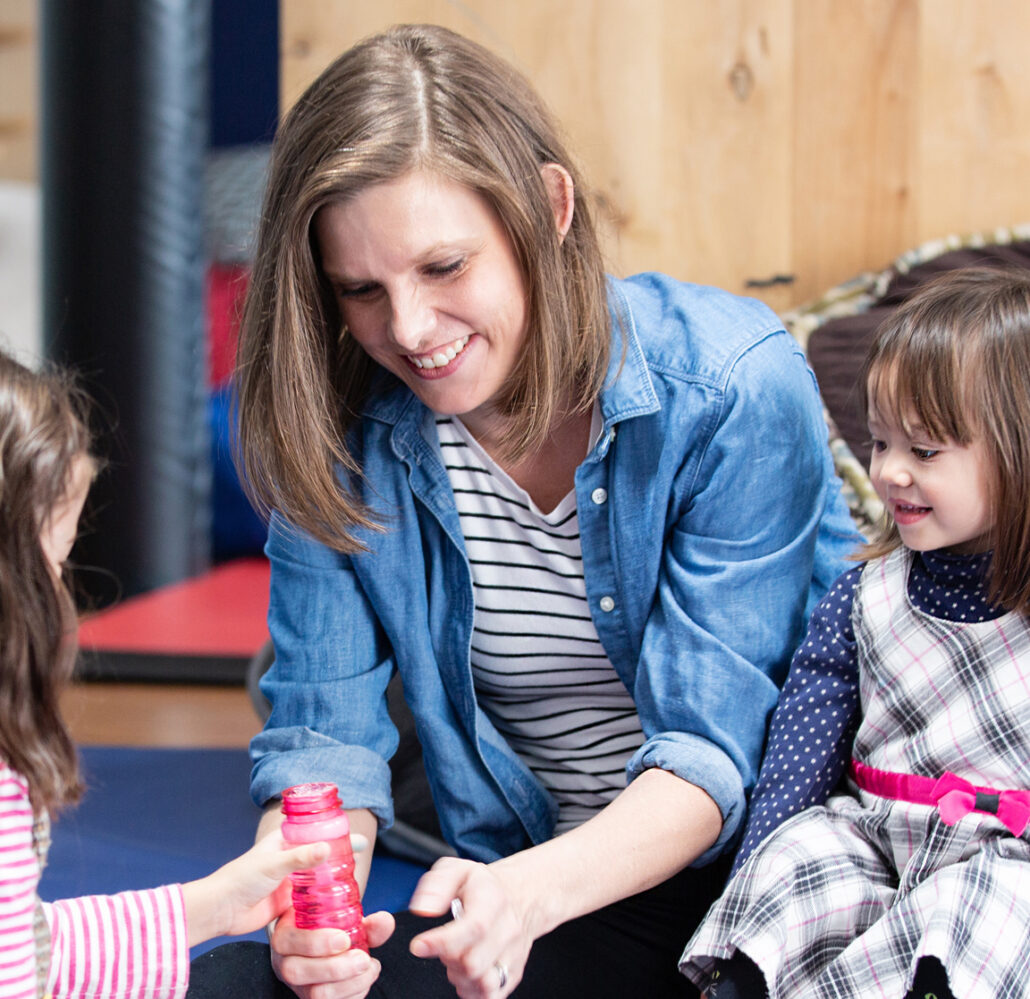
Blue Bird Day is a rotational therapy program structured like a preschool or kindergarten, but instead of teachers all our staff are therapists! This program is designed to foster socialization, sensory regulation, and learning for children ages 2-7 and helps provide children the tools they need to succeed in a traditional classroom.
Eyas Landing is an outpatient therapy clinic that provides services for children ages 0-21. Our multidisciplinary team of therapists provide ABA, developmental, occupational, physical, speech, nutrition and feeding therapy along with early intervention, social work, counseling, and neuropsychological testing at our West Loop clinic, in-home, at school, and virtually.
Merlin Day Academy is a therapeutic day school for children ages 6-14. Our proprietary model utilizes daily therapeutic and educational rotations to support children’s growth, learning, and their transition into the least restrictive environment possible.