Receiving an autism spectrum disorder (ASD) diagnosis for your child can feel overwhelming. You wonder: What caused this? Could I have prevented it? Is there a cure? Will my child be okay? These are natural, human responses to learning that your child’s brain works differently than you expected. Take a breath. You are not alone, and there is hope ahead.
What Actually Causes Autism?
The honest answer is that we do not fully understand all the causes of autism.
Autism does not seem to have a single cause. Instead, it results from a complex interplay of genetic and environmental factors that influence brain development.
The Genetic Component
Research consistently shows that genetics play a significant role in autism. The development of the brain and the way neurons interact are influenced by several different genes. Some children inherit genetic variants from their parents, while others experience spontaneous mutations that occur naturally.
According to studies, if one identical twin has autism, there’s a 60-90% chance the other twin will also be on the spectrum. This high concordance rate demonstrates the strong genetic influence. However, it’s rarely about a single “autism gene.” Scientists have identified hundreds of genetic variations associated with autism, each contributing a small piece to the overall picture.
In certain instances, autism is associated with specific genetic conditions such as fragile X syndrome or Rett syndrome. However, these account for only a small percentage of cases. Most children with autism don’t have an identifiable genetic syndrome, making it clear that the genetic landscape of autism is incredibly diverse and complex.
Environmental Influences
While genetics lay the foundation, environmental factors during pregnancy and early infancy may influence whether autism develops. It’s crucial to understand that these are risk factors, not definitive causes, and most children exposed to these factors do not develop autism.
Research has identified several environmental factors associated with increased autism risk:
Pregnancy-Related Factors:
- Advanced parental age, particularly maternal age over 35
- Pregnancy complications such as gestational diabetes or bleeding
- Prenatal exposure to certain medications, especially valproate (an anti-seizure medication)
- Maternal infections or significant immune responses during pregnancy
Birth-Related Factors:
- Premature birth (before 37 weeks)
- Low birth weight
- Reduced oxygen to the baby during delivery
- Birth complications requiring immediate medical intervention
What Does NOT Cause Autism
Parenting styles, emotional trauma, or how much attention you gave your baby did not cause autism. The outdated and harmful “refrigerator mother” theory—which blamed cold, unaffectionate mothers for autism—has been thoroughly debunked.
Autism is a neurodevelopmental difference with strong genetic components, not the result of parenting choices or childhood experiences.
You did not cause your child’s autism through anything you did or did not do.
This is one of the most important messages for parents to understand. Autism develops from complex interactions of genetic and biological factors that are beyond parental control.

Is There a Cure for Autism?
This is the most important question parents ask, and the answer requires careful framing. Autism is not a disease, it’s a neurodevelopmental difference in how the brain processes information, experiences the world, and communicates. As a result, autism is not something that can or should be “cured” like a typical medical condition. However, this does not mean your child will not progress, develop, or thrive. With effective support, numerous children achieve significant improvement in communication abilities, social skills, autonomy, and overall quality of life.
Understanding the Autism Spectrum
Autism presents differently in every individual, which is why professionals refer to it as a “spectrum.” The severity scale helps clinicians describe the level of support a person needs:
- Level 1 (Requiring Support): Individuals may struggle with social situations, have difficulty switching between activities, and show organizational challenges, but they can often function relatively independently with some support.
- Level 2 (Requiring Substantial Support): Individuals have more noticeable difficulties with verbal and nonverbal communication, limited flexibility with change, and more restricted interests or repetitive behaviors.
- Level 3 (Requiring Very Substantial Support): Individuals have severe difficulties with communication and social interaction, extremely limited flexibility, and behaviors that significantly interfere with daily functioning.
It’s important to note that a child’s level isn’t fixed forever. With intervention and development, many children move along the spectrum, requiring less intensive support over time.
The Case of the “Recovered” Twins
You may have heard stories about children who “fully recovered” from autism. These accounts, while hopeful, require careful interpretation. There have been documented cases of twins and other children who, after intensive early intervention, no longer met diagnostic criteria for autism. However, researchers debate what this truly means.
Some experts believe these children may have had milder symptoms that responded exceptionally well to intervention. Some people believe that certain children could have received an incorrect diagnosis at first. Still others propose that these individuals still have autistic traits but have developed such effective coping strategies that they no longer meet clinical thresholds for diagnosis.
A landmark 2013 study by Deborah Fein and colleagues published in the Journal of Child Psychology and Psychiatry examined children who had “optimal outcomes”—those who lost their autism diagnosis after early intensive intervention. The research followed thirty-four individuals aged 8-21 who had documented early autism diagnoses but no longer met diagnostic criteria. The findings revealed that while these children no longer qualified for an autism diagnosis, many still had subtle differences in how they processed social information or managed sensory input.
Subsequent research (2014-2024) has confirmed and significantly expanded these findings. Brain imaging studies by Troyb et al. (2014) showed that optimal outcome individuals have neural activation patterns intermediate between autism and typical development, suggesting neurological differences may persist despite behavioral improvements.
Eye-tracking research (Kelley et al., 2019) demonstrated different patterns of social attention even after diagnosis loss. Large-scale longitudinal studies, including a 2023 JAMA Pediatrics analysis, estimate that 3-25% of children initially diagnosed with autism may eventually lose their diagnosis.
The strongest predictors for optimal outcomes include:
- Intervention starting before age 3
- Higher initial cognitive abilities and language development
- Less severe initial symptoms
- Access to intensive early intervention (20-40 hours per week)
However, current research (2023-2025) emphasizes important nuances. These individuals often still identify as autistic or neurodivergent and may experience significant exhaustion from compensatory strategies or “masking.” The scientific community now recognizes that losing a diagnosis does not mean becoming neurotypical—rather, it reflects the dimensional nature of autism and the remarkable adaptability of young brains.
Recent work has shifted focus toward understanding what “thriving” means from autistic perspectives, rather than simply measuring symptom reduction.
These cases show us that the goal is not to eliminate autism, but instead that:
- Early intervention can lead to profound developmental gains, particularly when you started young.
- The autism spectrum is genuinely broad and variable, with some individuals near diagnostic thresholds.
- Some children’s presentations change significantly over time due to neuroplasticity and learned compensation.
- Functional outcomes can be far better than initial diagnoses might suggest, though quality of life involves more than diagnostic status alone.
Evidence-Based Support
Rather than seeking a cure, the goal is to provide support that helps your child communicate effectively, develop meaningful relationships, learn adaptive skills, and live as independently as possible.
Behavioral Therapies
Applied Behavior Analysis (ABA) is the most researched intervention for autism. It uses positive reinforcement to teach skills and reduce challenging behaviors. Modern ABA focuses on naturalistic learning in everyday environments rather than rigid, repetitive drills. High-quality ABA programs follow the child’s lead, engage with their interests, and focus on teaching valuable skills rather than simply promoting compliance.
Communication Support
Speech and language therapy address both verbal and nonverbal communication. For some children, this means developing spoken language. For others, it involves learning to use alternative communication methods like sign language, picture exchange systems, or speech-generating devices. The goal is functional communication, regardless of the method.
Physical Therapy
Physical therapy focuses on improving a child’s strength, balance, coordination, and mobility to support greater independence and participation in daily activities. Physical therapists use exercises, stretches, and specialized equipment to help children build core strength, improve posture, and increase flexibility. They also address issues like walking patterns (gait training) and provide strategies to prevent injuries. The ultimate goal is to support each child’s ability to move through their environment more confidently and comfortably, whether it’s walking, running, or navigating stairs.
Occupational Therapy
Occupational therapists help children develop daily living skills like dressing, eating, and toileting. They also address sensory processing differences—the way children with autism may be over- or under-sensitive to sounds, textures, lights, or movement. Sensory integration therapy can help children feel more comfortable in their environments.
Social Skills Training
Structured programs teach children how to interpret social cues, take turns in conversation, understand perspective-taking, and navigate friendships. These skills don’t always come naturally to autistic children but can definitely be learned with explicit instruction and practice.
Parent-Mediated Interventions
Programs like DIR/Floor time and Responsive Teaching train parents to use everyday interactions as learning opportunities. These relationship-based approaches recognize that parents are their child’s most important teachers and that learning happens best in warm, responsive relationships.
Educational Support
School-based interventions include visual schedules, structured teaching methods like TEACCH (Treatment and Education of Autistic and Related Communication-Handicapped Children), individualized education programs (IEPs), and classroom accommodations. Some children thrive in mainstream classrooms with support, while others benefit from specialized autism programs.
Medical Treatment
While there is no medication for autism itself, doctors may prescribe medications to address co-occurring conditions like anxiety, ADHD, sleep problems, or severe irritability. These medications don’t change autism but can improve quality of life by addressing specific challenges.
Early Intervention is Critical
Research consistently demonstrates that starting intervention before age three leads to significantly better outcomes. During these early years, the brain has remarkable plasticity—the ability to form new neural connections and pathways. Intensive early intervention capitalizes on this plasticity to promote development in communication, social engagement, play skills, and adaptive behavior.
Studies show that children who receive early, intensive intervention often develop stronger language skills, better social relationships, and greater independence than those who start later. Some make such significant progress that they can attend mainstream schools with minimal support.
However, it’s never too late to start. Children, teenagers, and even adults can continue learning and developing with appropriate support.
Reframing the Conversation
The autism community encourages us to think about autism differently. Rather than viewing it as something wrong that needs fixing, many advocate for the neurodiversity paradigm: the understanding that autism represents natural variation in human neurology, not a defect.
From this perspective, the goal isn’t to make autistic children “normal” but to:
- Support their strengths and interests
- Help them develop skills for independence
- Reduce barriers in their environment
- Teach them to advocate for their needs
- Create a world that accepts and accommodates neurodivergent people
This doesn’t mean ignoring challenges or denying that autism can be difficult. Many autistic individuals struggle with anxiety, sensory overload, communication barriers, and social isolation. These challenges deserve attention and support. But the solution isn’t to eliminate autism—it’s to provide tools, accommodations, and understanding.
Your child is still the same person they were before the diagnosis. The label simply helps you understand their needs better and access appropriate support. With early intervention, patience, and acceptance, many children with autism lead fulfilling, meaningful lives.
Focus on celebrating small victories, connecting with other parents who understand, educating yourself about autism, and building a strong support team. Your child has strengths and abilities that will emerge over time. Your job isn’t to fix them—it’s to help them become the best version of themselves.
The journey ahead may look different than you imagined, but it can still be beautiful, joyful, and full of growth. Welcome to the autism community—there’s a whole world of support waiting for you.
Frequently Asked Questions
What is the main cause of autism?
There is no single cause of autism. Scientific research shows it develops from a complex combination of genetic and environmental factors that affect brain development. Genetics play a major role, but it is not typically one “autism gene.” Instead, hundreds of genetic variations contribute to the likelihood of developing autism.
Did I do something during my pregnancy to cause my child’s autism?
No. This is a common worry, but autism is not caused by anything a parent did or did not do. It is a neurodevelopmental difference that arises from complex biological factors well beyond your control. Outdated theories that blamed parents have been completely debunked.
Is there a link between vaccines and autism?
Absolutely not. Numerous large-scale, credible scientific studies involving millions of children worldwide have consistently found no link between vaccines and autism. The original study that suggested a connection was proven to be fraudulent and was retracted. Every major global health organization, including the CDC and WHO, confirms that vaccines are safe and do not cause autism.
Can autism be cured?
Autism is not a disease to be cured; it is a different way of processing the world. Therefore, there is no “cure.” However, this does not mean your child cannot make incredible progress. The goal of intervention is not to eliminate autism but to support your child in developing skills, building independence, and improving their quality of life.
What does it mean when people say a child “recovered” from autism?
In some cases, children who receive intensive early intervention no longer meet the diagnostic criteria for autism later in life. This is often referred to as an “optimal outcome.” Research suggests these children may have had milder initial symptoms or responded exceptionally well to therapy. While they may no longer have a diagnosis, many still have underlying autistic traits and have learned effective coping strategies. It highlights the power of early intervention, but it does not mean the autism was “cured.”
What are the most effective supports for a child with autism?
Evidence-based interventions are key. These include:
- Applied Behavior Analysis (ABA): Uses positive reinforcement to teach skills and reduce challenging behaviors.
- Speech and Language Therapy: Helps develop communication, both verbal and non-verbal.
- Physical Therapy: Improves strength, balance, coordination, and mobility to support greater independence and participation in daily activities.
- Occupational Therapy: Focuses on daily living skills and managing sensory sensitivities.
- Social Skills Training: Teaches how to understand and navigate social situations.
- Parent-Mediated Interventions: Equips parents to support their child’s development during everyday activities.
Why is early intervention so important?
The brain is most adaptable, or “plastic,” before the age of three. Starting therapies early takes advantage of this critical window to build foundational skills in communication, social interaction, and learning. Children who begin intensive intervention early often have significantly better long-term outcomes, but it is never too late to start making progress.
References:
- American Psychiatric Association. (2013). Diagnostic and Statistical Manual of Mental Disorders (5th ed.).
- Fein, D., et al. (2013). Optimal outcome in individuals with a history of autism. Journal of Child Psychology and Psychiatry, 54(2), 195-205.
- Howlin, P., Magiati, I., & Charman, T. (2009). Systematic review of early intensive behavioral interventions for children with autism. American Journal on Intellectual and Developmental Disabilities, 114(1), 23-41.
- Jeste, S. S., & Geschwind, D. H. (2014). Disentangling the heterogeneity of autism spectrum disorder through genetic findings. Nature Reviews Neurology, 10(2), 74-81.
- Taylor, L. E., Swerdfeger, A. L., & Eslick, G. D. (2014). Vaccines are not associated with autism: An evidence-based meta-analysis. Vaccine, 32(29), 3623-3629.
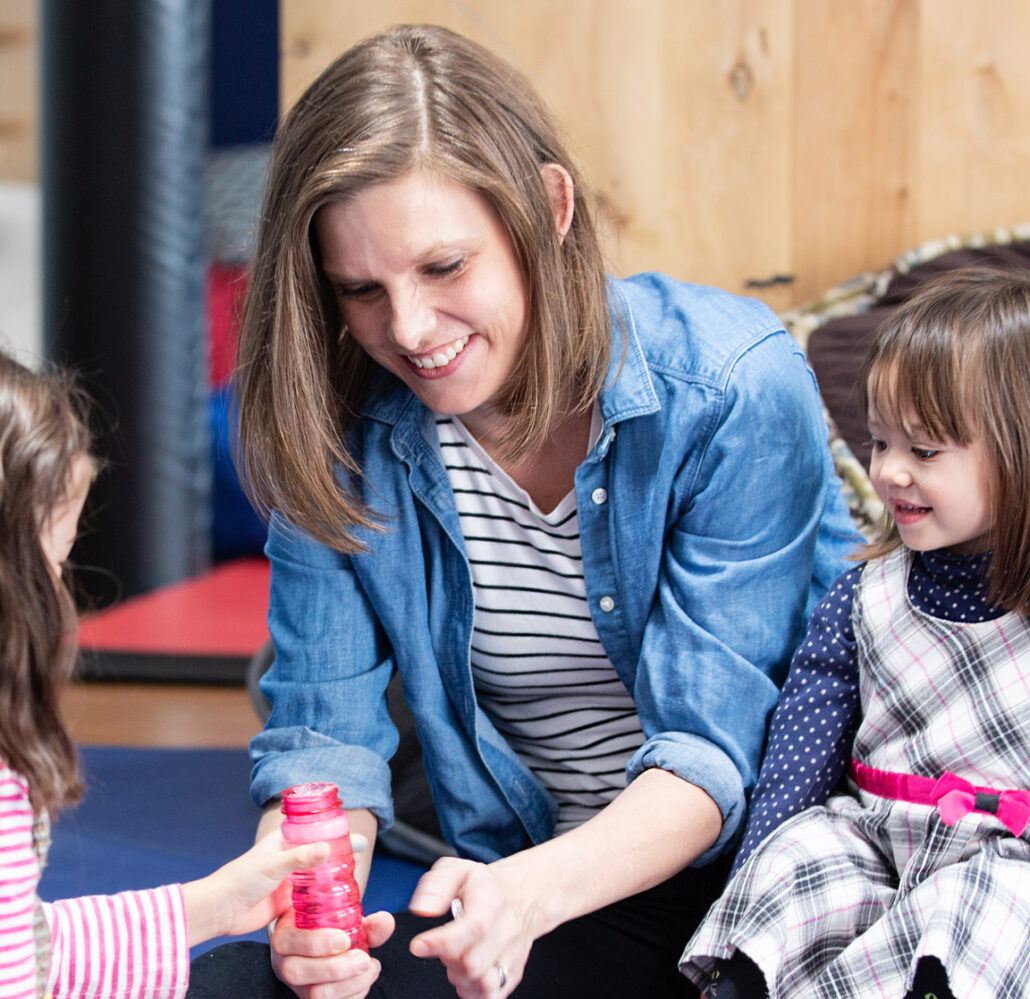
Learn More About My Programs
Blue Bird Day is a rotational therapy program structured like a preschool or kindergarten, but instead of teachers all our staff are therapists! This program is designed to foster socialization, sensory regulation, and learning for children ages 2-7 and helps provide children the tools they need to succeed in a traditional classroom.
Eyas Landing is an outpatient therapy clinic that provides services for children ages 0-21. Our multidisciplinary team of therapists provide ABA, developmental, occupational, physical, speech, nutrition and feeding therapy along with early intervention, social work, counseling, and neuropsychological testing at our West Loop clinic, in-home, at school, and virtually.
Merlin Day Academy is a therapeutic day school for children ages 6-14. Our proprietary model utilizes daily therapeutic and educational rotations to support children’s growth, learning, and their transition into the least restrictive environment possible.